History of the USA – an overview
From the pre-colonial period to today, in 24 eras.
From 1607 to today
Twenty-four eras, from the time before colonisation to the present. Each era can be opened individually and lists the events with date, place and context – from the founding of Jamestown through the Civil War, the New Deal and the civil rights movement to the events of the current year.
Timeline
~ 12,000 BC: Nomadic hunters coming from Siberia cross the Bering Strait towards North America; the exact dates of the earliest migration are disputed, however
~ 1000 AD: The Viking Leif Eriksson visits what is now northeastern Canada
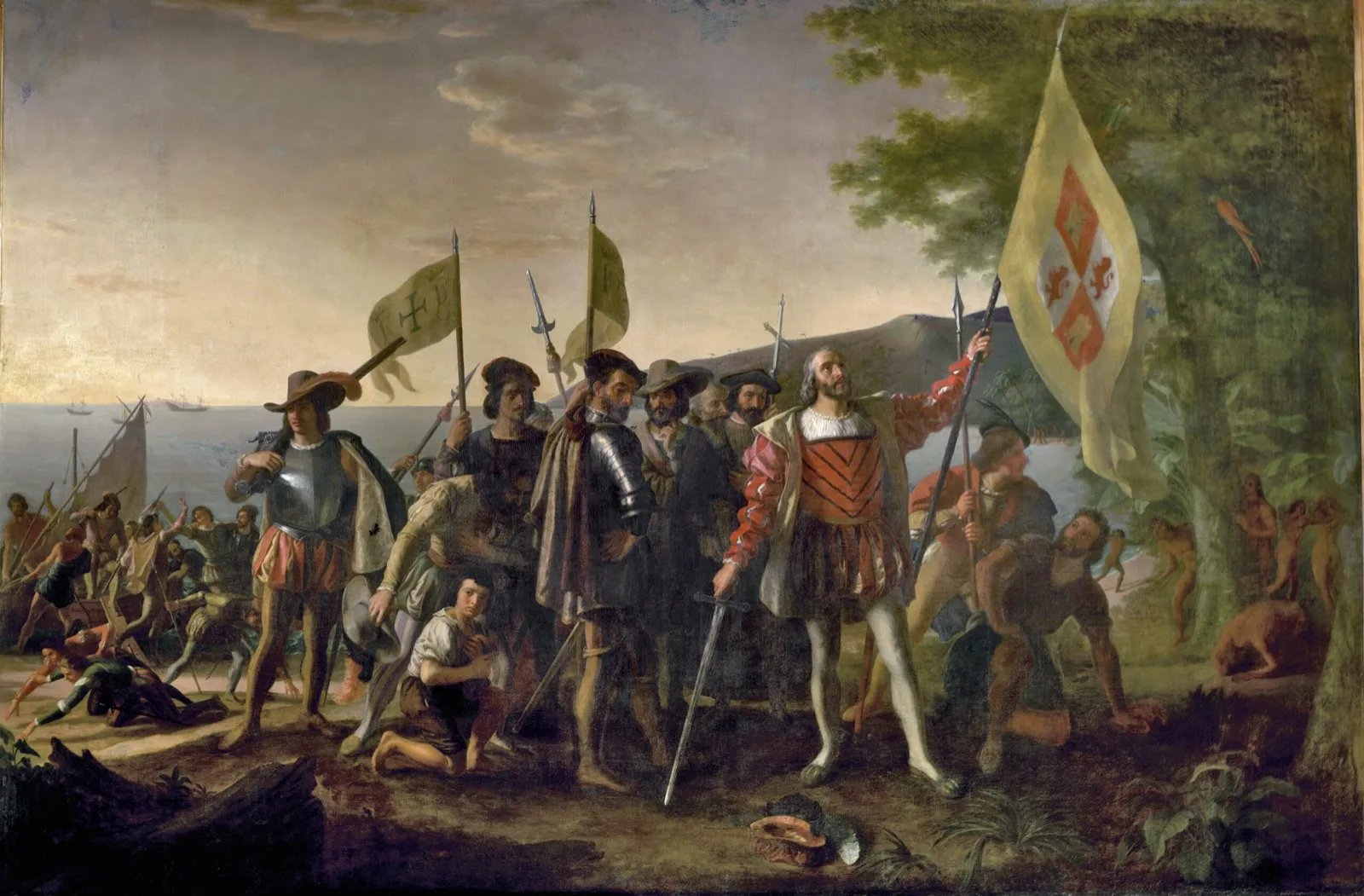
12 October 1492: Christopher Columbus reaches San Salvador and ‘discovers’ the New World
April 1507: On a new map of the world, Martin Waldseemüller names the continent “America” in honour of Amerigo Vespucci
1570s: The Iroquois Confederacy (or Haudenosaunee: ‘people of the longhouse’, Five Nations, later Six Nations) is founded; its members are the Mohawk, Onondaga, Oneida, Cayuga and Seneca (Tuscarora)
1585: Sir Walter Raleigh founds Roanoke Colony, the first English settlement
14 May 1607: English settlers found a colony at Jamestown (Virginia), the first permanent English settlement
August 1619: The first African slaves are brought to the English part of North America
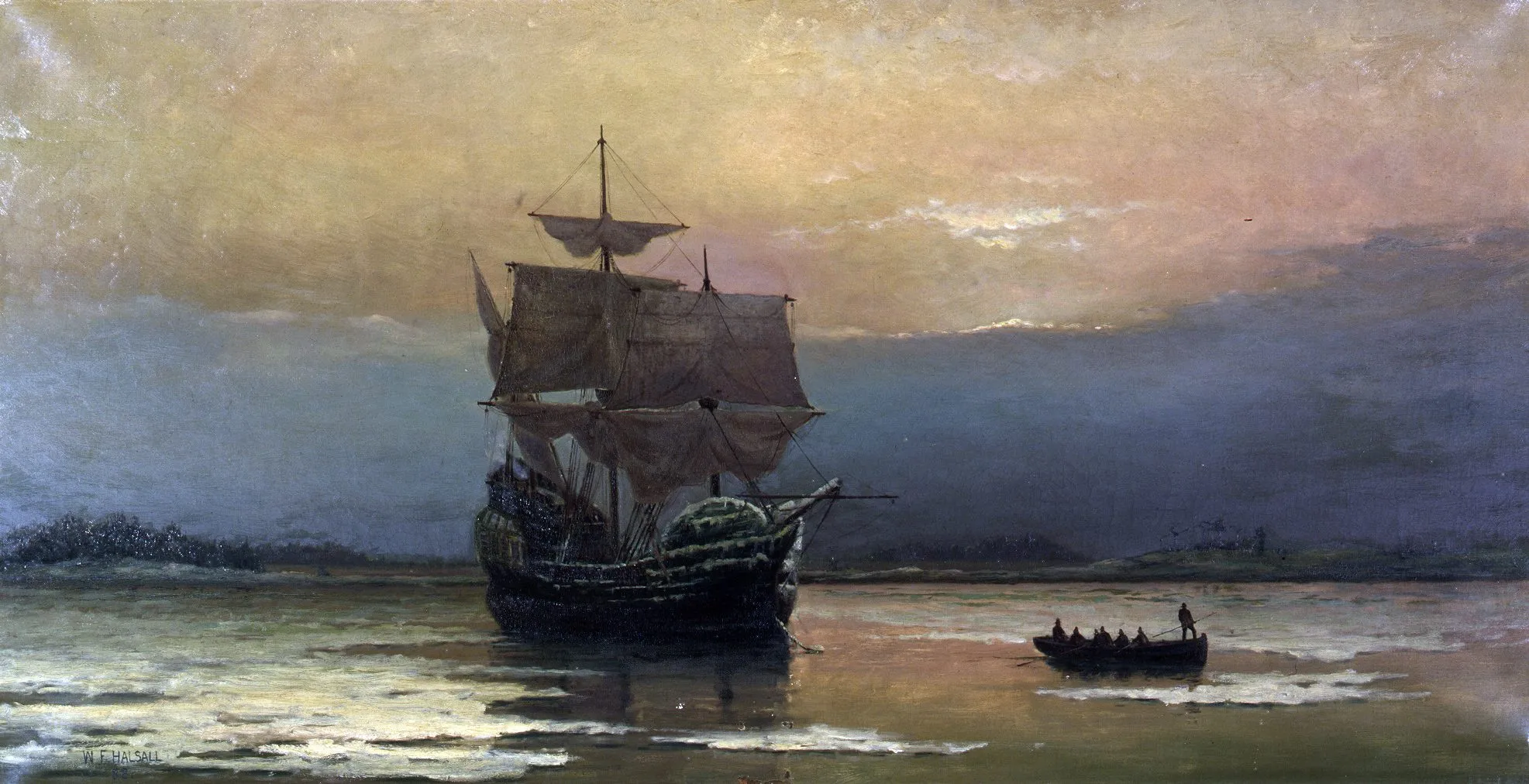
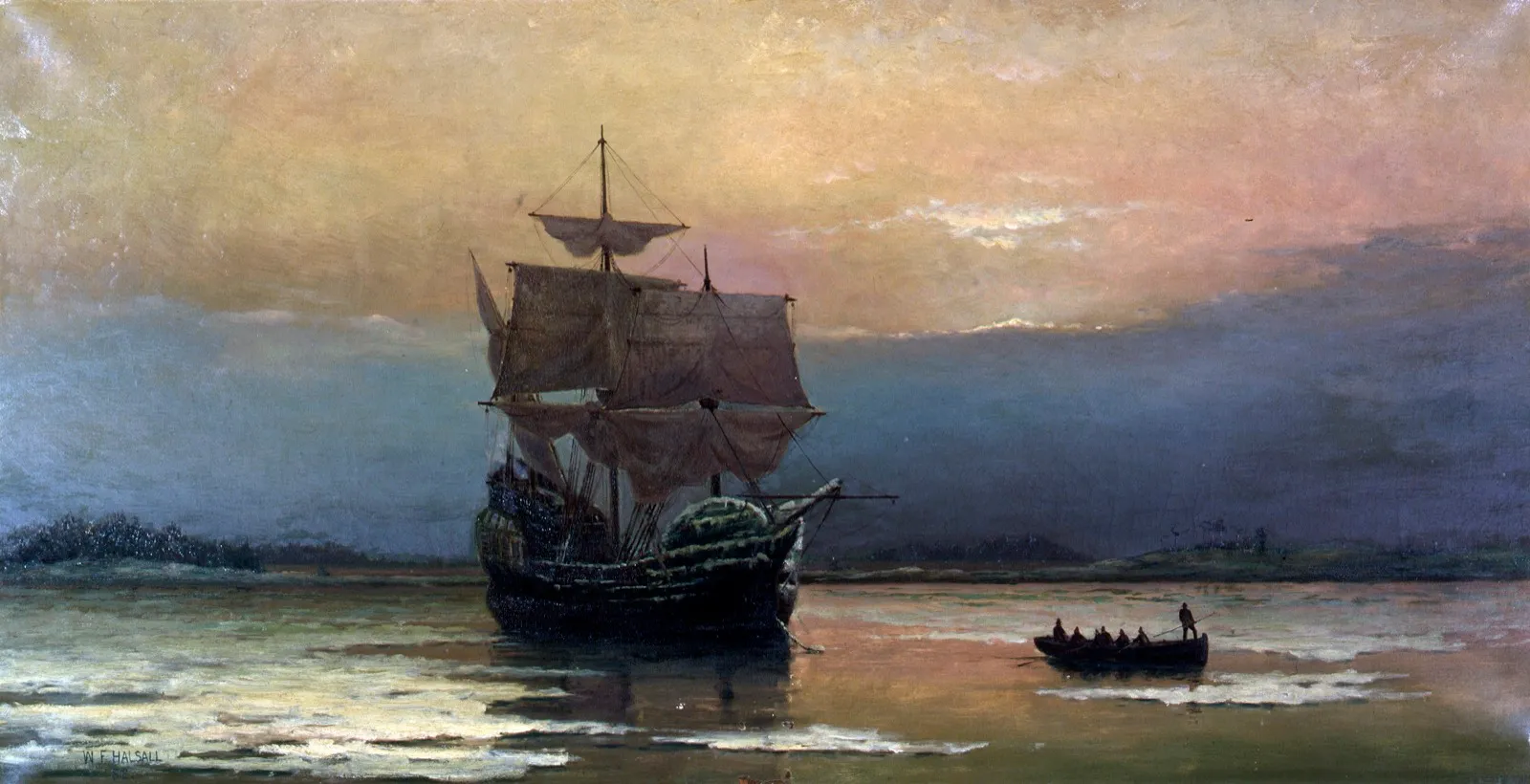
21 November 1620: The Pilgrim Fathers from England reach Plymouth (Massachusetts) on the Mayflower and settle there. The Mayflower Compact, a kind of social contract, is signed
1656: The first Quakers reach New England
1692: The Salem witch trials (Massachusetts) take place
01 June 1740: The Plantation Act comes into force; this law is meant to encourage resettlement in the colonies and to regulate colonial naturalisation procedures
18 June-11 July 1754: Albany Congress; American representatives of the colonies meet and discuss for the first time what a formal union could look like
1754-1763: Seven Years' War in North America (known as the French and Indian War). After the war the English hold the greatest control over North America. It ends with the Peace of Paris (10 Feb. 1763)
16 December 1773: Boston Tea Party; colonists from Massachusetts, disguised as Native Americans, throw tea into Boston Harbor to protest against the taxes England had imposed on it; “No taxation without representation”
05 Sept.-26 Oct. 1774: First Continental Congress in Philadelphia (Pennsylvania), twelve colonies send delegates
20 Oct. 1774: The Continental Association
19 April 1775: British soldiers and colonial militias exchange fire at Lexington and Concord (Massachusetts); the American War of Independence begins
10 May 1775: Congress votes to form a Continental Army out of the militia groups near Boston, George Washington is appointed commanding general; on 14 June it becomes the United States Army
10 January 1776: Thomas Paine publishes “Common Sense”, a pamphlet in which he argues for independence from Great Britain
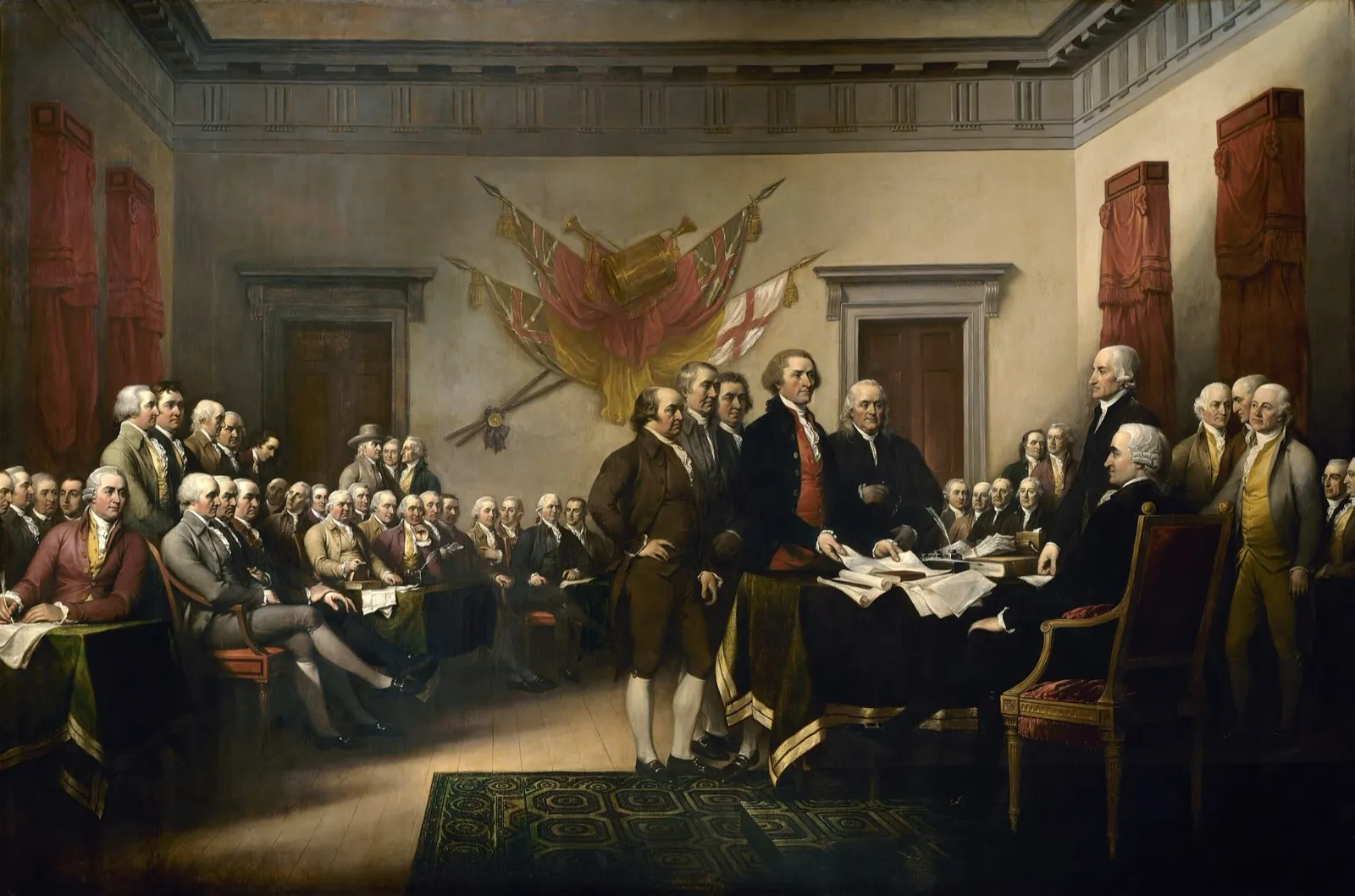
4 July 1776: The Continental Congress adopts the Declaration of Independence
5 Nov. 1777: The Second Continental Congress adopts the Articles of Confederation; they are ratified on 1 March 1781
19 Oct. 1781: A large British army surrenders at Yorktown (Virginia), effectively ending the American War of Independence
03 Sept. 1783: The Peace of Paris (also known as the Second Treaty of Paris) ends the American War of Independence
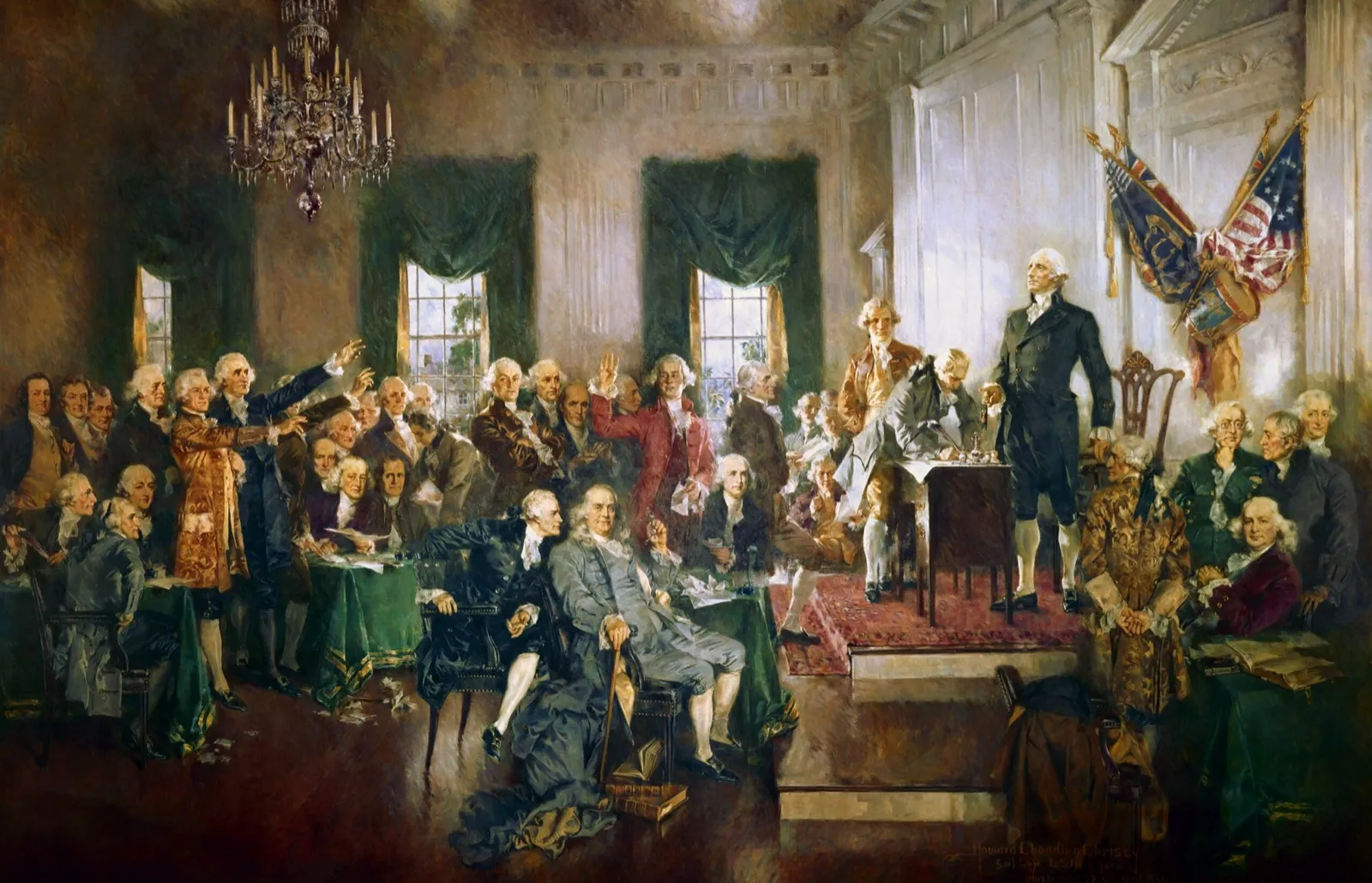
17 Sept. 1787: An assembly of delegates agrees on a draft that later becomes the U.S. Constitution (Constitutional Convention of the United States)
15 Dec. 1788-10 Jan. 1789: First presidential election
30 April 1789: George Washington is inaugurated in New York City as the first U.S. President
15 Dec. 1791: The Bill of Rights (the first ten amendments to the Constitution) is ratified
05-18 Feb. 1793: Chisholm v. Georgia is regarded as the first major case shaped by the Supreme Court of the United States; it paves the way for the 11th Amendment
1791-1794: Whiskey Rebellion; in Western Pennsylvania people protest against the first taxes the new government levies on a domestic product
14 Dec. 1799: George Washington dies
24 April 1800: The Library of Congress is founded
17 Feb. 1801: Thomas Jefferson and Aaron Burr receive the same number of votes in the Electoral College; the House of Representatives elects Jefferson President (1801-1809), Burr is elected Vice President
04 March 1801: Thomas Jefferson becomes the third U.S. President
04 July 1803: Louisiana Purchase: the United States buys 2,144,476 km² west of the Mississippi River from France, at a cost of around 15 million dollars
11 July 1804: The duel between Aaron Burr and Alexander Hamilton takes place in Weehawken (New Jersey). Hamilton dies
02 March 1807: The U.S. slave trade with Africa ends, but nothing changes about the domestic slave trade
18 June 1812: Congress declares war on Great Britain; the War of 1812 (also known as the Second War of Independence) begins and ends in 1814 with the Treaty of Ghent
06 March 1820: Congress agrees to the Missouri Compromise, which is meant to maintain a balance between free and slave-holding states
04 July 1826: Thomas Jefferson and John Adams die on the 50th anniversary of the Declaration of Independence
04 March 1829: Andrew Jackson becomes the seventh President of the United States
1830s: The Oregon Trail is used by settlers on their way to the Pacific Northwest
28 May 1830: Indian Removal Act, resulting in the Trail of Tears in 1838. It is the legal basis for driving the Cherokee Nation out of the southeastern United States; in the end more than 4,000 people die
23 Feb.-06 March 1836: Battle of the Alamo, part of the Texas Revolution
01 July 1839: Revolt of African slaves on the Spanish ship La Amistad; in 1841 John Q. Adams argues the case before the Supreme Court, which rules in favour of the defendants (09 March 1841)
24-26 April 1846: The Mexican-American War begins; it ends on 30 May 1848 with the Treaty of Guadalupe Hidalgo
Jan. 1848: Gold is found in California, leading to the California Gold Rush of 1849
19-20 July 1848: Seneca Falls Convention, the first women's rights convention, takes place in Seneca Falls (New York)
29 May 1851: At the women's rights convention in Akron (Ohio), Sojourner Truth gives her impromptu speech “Ain't I a Woman?”, calling on white women's rights campaigners to stand up for the rights of Black women as well
06 March 1852: The Supreme Court dismisses a suit brought by Dred Scott and rules that slaves are property and hold no more rights than any other property. The ruling is considered one of the key triggers of the American Civil War
03 April 1860: The Pony Express begins. The Pony Express was a mail service organised as a relay of riders that operated for 18 months before going bankrupt. The route ran from the Missouri River (Missouri) to Sacramento (California). Delivery time between the Atlantic and Pacific coasts fell to about 10 days (previously it took up to 6 months)
06 Nov. 1860: Abraham Lincoln is elected the sixteenth U.S. President
04 Feb. 1861: The secessionists (South Carolina, Mississippi, Florida, Alabama, Georgia, Louisiana and Texas) found the Confederate States of America
12 April 1861: The southern states (Confederates) fire on Fort Sumter in Charleston (South Carolina), still held by the northern states; the American Civil War begins
02-04 July 1863: Battle of Gettysburg; in one of the bloodiest and probably most decisive battles, Union forces force a Confederate army to withdraw
19 Nov. 1863: Gettysburg Address
Jan. 1865: The 13th Amendment is passed, making slavery illegal
14 April 1865: Abraham Lincoln is shot during a visit to the theatre in Washington, D.C. He dies a day later
09 May 1865: The American Civil War ends
18 Oct. 1867: The territory of Alaska is acquired from the Russian Empire
16 May 1868: The Senate votes 35-19 on the impeachment of President Andrew Johnson; the required two-thirds majority is missed by one vote
09 July 1868: The 14th Amendment, granting equal protection under the law to all people with American citizenship, whether born in the United States or naturalised, is ratified
06 June 1872: Victoria Claflin Woodhull is the first female presidential candidate
25 June 1876: Battle of the Little Bighorn in Montana; the Lakota, Dakota, Northern Cheyenne and Arapaho tribes (led by Sitting Bull, Crazy Horse, Chief Gall, Lame White Man and Two Moon) defeat the 7th Cavalry Regiment commanded by George A. Custer. The battle is also known as Custer's Last Stand
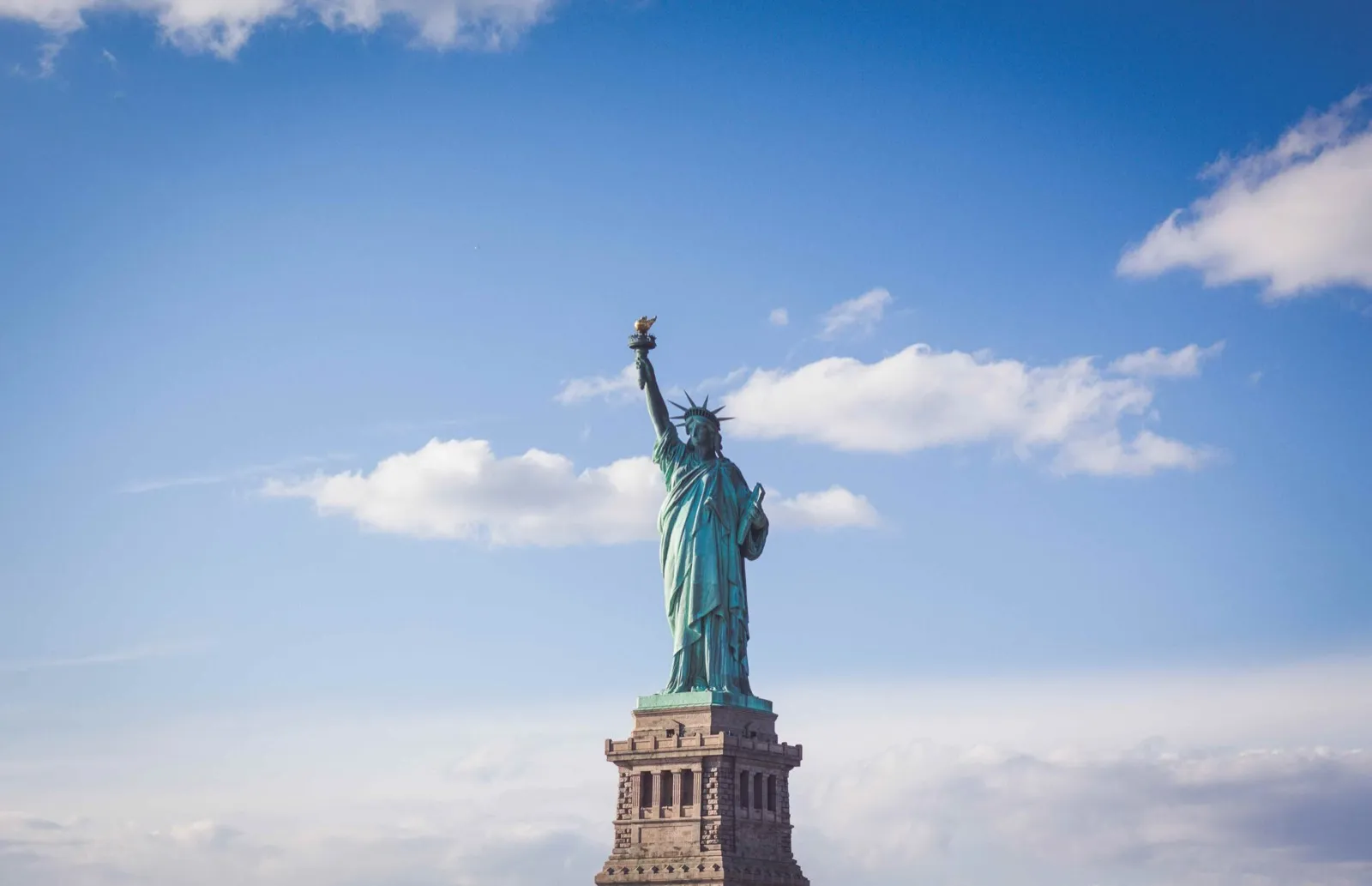
28 Oct. 1886: The Statue of Liberty, a gift from the people of France engraved with the date of the Declaration of Independence (4 July 1776), is dedicated
29 Dec. 1890: Wounded Knee Massacre. The massacre takes place after an unsuccessful attempt to disarm a Lakota camp. More than 200 people are killed
06 May 1896: Plessy v. Ferguson. The Supreme Court rules that, under certain conditions, states are legally allowed to segregate public facilities as long as they are “equal” (“separate but equal”)
16 Aug. 1896: Klondike Gold Rush
15 Feb. 1898: The battleship Maine explodes under mysterious circumstances in Havana Harbor, triggering a war with Spain
17 Dec. 1903: Wilbur and Orville Wright complete their first successful flights in a “heavier-than-air machine” at Kitty Hawk (North Carolina)
06 April 1917: The United States enters the First World War
11 Nov. 1918: The First World War ends
16 Jan. 1919: The 18th Amendment, establishing Prohibition, comes into force
24 Oct. 1929: U.S. stock market crash, which becomes known as “Black Thursday”. The Great Depression begins
31 March 1931: The Star-Spangled Banner becomes the official U.S. national anthem
1933-1938: New Deal, in response to the Great Depression
05 Dec. 1933: The 21st Amendment is ratified and ends Prohibition
14 Aug. 1935: President Franklin D. Roosevelt signs the Social Security Act, which among other things introduces a public pension system
06 May 1937: Hindenburg disaster; the airship accident marks the provisional end of commercial airship travel
07 Dec. 1941: Pearl Harbor. U.S. forces are attacked by a Japanese armada; the United States enters the Second World War
06 June 1944: D-Day
19 Feb.-26 March 1945: Battle of Iwo Jima
26 March-2 July 1945: Battle of Okinawa
08 May 1945: The Second World War ends in Europe
06 Aug. 1945: A U.S. aircraft drops an atomic bomb on the city of Hiroshima, Japan
09 Aug. 1945: A U.S. aircraft drops an atomic bomb on the city of Nagasaki, Japan, effectively ending the Second World War
12 March 1947: The Truman Doctrine states that America follows the principle of “supporting free peoples who are resisting attempted subjugation by armed minorities or by outside pressure”. It leads to the founding of NATO in 1949
03 April 1947: The Marshall Plan
1950-1954: The McCarthy era begins; this period is also known as the Second Red Scare and is named after Senator Joseph McCarthy. It is characterised by a campaign of fear about communist influence on American institutions, about espionage by Soviet agents, and by increased political repression
24 June 1950: North Korean troops invade South Korea; within a week American troops are involved in the fighting
17 May 1954: In Brown v. Board of Education the Supreme Court rules that separate facilities for pupils divided by skin colour violate the 14th Amendment and are therefore unconstitutional
01 Nov. 1955: The Vietnam War begins
01 Dec. 1955: Rosa Parks refuses to give up her seat on the bus to a white passenger, leading to the Montgomery bus boycott
17-20 April 1961: The Bay of Pigs Invasion is a failed attack by Cuban exiles who, with covert support from the United States, sought to overthrow the revolutionary government under Fidel Castro; the failed invasion changes the relationship between Cuba and the United States
16-29 Oct. 1962: Cuban Missile Crisis. The crisis comes very close to a direct nuclear confrontation between the United States and the USSR
23 Aug. 1963: March on Washington; Martin Luther King Jr. gives his “I Have a Dream” speech
22 Nov. 1963: President John F. Kennedy is shot in Dallas (Texas)
02 July 1964: The Civil Rights Act of 1964 ends legally enforceable racial segregation
04 April 1968: Martin Luther King Jr. is shot in Memphis (Tennessee)
21 July 1969: Neil Armstrong and Buzz Aldrin set foot on the Moon; the Apollo 11 mission runs from 16 to 24 July
17 June 1972: Watergate affair
27 Jan. 1973: The Paris Peace Accords (officially: Agreement on Ending the War and Restoring Peace in Vietnam) end direct U.S. participation in the Vietnam War, which ends in 1975
08 Aug. 1974: President Richard M. Nixon resigns from office in the course of the Watergate affair
08 Nov. 1980: Ronald Reagan is elected the 40th President
09 Nov. 1989: The fall of the Berlin Wall
16 Jan. 1991: Four months after Iraq invaded Kuwait, U.S. and allied forces launch an air campaign against Iraq
26 Dec. 1991: The Cold War ends
19 April 1995: Bombing of the Murrah Federal Building in Oklahoma City. The attack is the worst domestic terrorist attack in U.S. history
03 Oct. 1995: The trial of O.J. Simpson ends in an acquittal
19 July-4 Aug. 1996: Summer Olympics in Atlanta. On 27 July 1996 a bombing takes place during the Games, carried out by an activist of the Christian extremist terror organisation Army of God
1998/1999: Lewinsky affair; President Bill Clinton is accused of having a sexual affair with the intern Monica Lewinsky. In the course of the year the House of Representatives therefore opens impeachment proceedings. Clinton is acquitted on all counts
20 April 1999: School shooting at Columbine High School in Littleton (Colorado). Two seniors shoot dead 13 students and teachers in Colorado. At the time it is the deadliest school shooting, and it becomes a model for further school shootings, which is why “Columbine” becomes a synonym for them
12 Dec. 2000: George W. Bush is confirmed as President following a ruling by the Supreme Court. Al Gore wins the nationwide popular vote but loses in the Electoral College
11 Sept. 2001: Terrorists hijack aircraft and fly them into both towers of the World Trade Center in New York City, which eventually collapse. Further aircraft crash into the Pentagon and into a field near Shanksville (Pennsylvania). More than 3,000 people are killed and more than 6,000 injured
07 Oct. 2001: Operation Enduring Freedom; a major military operation within the war on terror declared by the United States; invasion of Afghanistan
26 Oct. 2001: USA PATRIOT Act; the law is intended to make investigations by federal authorities easier in the event of a terrorist threat
25 Nov. 2002: The Department of Homeland Security is founded
20 March 2003: Operation Iraqi Freedom; the United States, together with Great Britain, Australia and Poland, invades Iraq
13 Dec. 2003: U.S. special forces capture Saddam Hussein
25-30 Aug. 2005: Hurricane Katrina destroys the coastline of Louisiana, Mississippi and Alabama. Around 1,836 people die and Katrina causes damage of about 108 billion U.S. dollars, making it the most devastating natural disaster in the United States
Dec. 2007: The period of the Great Recession begins in the United States (mortgage credit crisis, the housing bubble bursts)
04 Nov. 2008: Barack Obama is elected the 44th President; he is the first African American to hold the office
2009: Protests by the Tea Party movement, which campaigns for less government influence, fiscal responsibility, individual freedoms and a conservative reading of the Constitution
23 March 2010: Obama signs the Affordable Care Act (Obamacare). It is the most significant overhaul of the U.S. health care system in 45 years
20 April 2010: The Deepwater Horizon drilling rig explodes in the Gulf of Mexico and the resulting oil spill is the worst environmental disaster of its kind in history
01 May 2011: U.S. Navy SEALs kill Osama bin Laden, the leader of al-Qaeda and mastermind of 11 September
21 July 2011: The Space Shuttle Atlantis returns from the ISS and lands at the Kennedy Space Center in Florida. It is the 135th and final mission of the programme, which began in 1981
14 Dec. 2012: At Sandy Hook Elementary School in Newtown (Connecticut) a gunman kills 26 people, among them 20 children
15 April 2013: Two homemade bombs are detonated near the finish line of the Boston Marathon. Three people die and several hundred are injured
26 June 2015: Same-sex marriage is legally recognised in all 50 states
20 July 2015: Diplomatic relations with Cuba are resumed. The United States embassy opens in Havana and the Cuban embassy in Washington, D.C.
08 Nov. 2016: Donald J. Trump is elected the 45th President
20 January 2017: Donald J. Trump is sworn in as the 45th President of the United States
09 May 2017: Trump dismisses FBI Director James Comey, which sets the Mueller investigation in motion
17 May 2017-22 March 2019: The special investigation (Mueller investigation, Russia investigation) into interference in the 2016 United States election campaign is carried out. It is to examine possible influence on the campaign by the Russian government, links between Trump's staff and Russian officials, and possible obstruction of justice by Trump and his staff. It ends with the Mueller Report
12 Aug. 2017: At a far-right demonstration (participants were above all members of the alt-right, the Ku Klux Klan, neo-Nazis, neo-Confederates, white nationalists and white supremacists) and counter-demonstrations in Charlottesville (Virginia), three people die. It sparks a debate about racism in modern American society
20 Sept. 2017: Hurricane Maria hits Puerto Rico. In total more than 3,000 people die from the storm and its consequences on Puerto Rico alone. The island's power supply is not fully restored for 11 months. Hurricane Maria is the deadliest natural disaster in U.S. history
01 Oct. 2017: A gunman opens fire during a concert on the Las Vegas Strip. 58 people die and 546 are injured. It is the deadliest mass shooting in modern United States history
15 Oct. 2017: The start of the #MeToo movement. After the extensive revelation of the allegations against Harvey Weinstein of sexual coercion, harassment and rape, the actress Alyssa Milano writes and reposts the following: “If all the women who have been sexually harassed or assaulted wrote ‘Me too’ as their status, we might give people a sense of the magnitude of the problem.” The phrase “Me Too” was used in 2006 by Tarana Burke, who wanted to foster and strengthen solidarity and empathy among women of colour (WOC) who had been sexually abused
14 Feb. 2018: A gunman kills 17 people and injures 17 at Marjory Stoneman Douglas High School in Parkland (Florida)
12 June 2018: Trump meets North Korean head of state Kim Jong-un in Singapore
29 Oct. 2018: 800 U.S. Army soldiers are ordered to the border with Mexico to support border officials so that thousands of Central American migrants do not enter the United States (Operation Faithful Patriot)
25 Jan. 2019: The longest government shutdown in history ends after 35 days (22 Dec. 2018-25 Jan. 2019)
01 Feb. 2019: Trump announces the official withdrawal of the United States from the INF disarmament treaty (Intermediate-Range Nuclear Forces Treaty)
27 Feb. 2019: The second meeting between Trump and Kim Jong-un takes place
26 July 2019: The Supreme Court rules that Trump is to receive 2.5 billion U.S. dollars for building the border wall with Mexico
12 Aug. 2019: An anonymous whistleblower files a complaint against Donald Trump and Rudy Giuliani. In the complaint they claim that the two were seeking foreign intervention for the 2020 presidential election. This complaint leads to the investigation of the Ukraine affair
24 Sept. 2019: Nancy Pelosi, Speaker of the House of Representatives, announces that the House is examining impeachment proceedings against Donald Trump
18 Dec. 2019: The House of Representatives charges President Trump with “high crimes and misdemeanors” (something a person can only commit by virtue of their office); the impeachment proceedings begin
20 Dec. 2019: President Trump signs the 2020 National Defense Authorization Act. It establishes the United States Space Force as the sixth branch of the armed forces
21 Jan. 2020: The first patient in the United States is diagnosed with the novel coronavirus (COVID-19)
05 Feb. 2020: The majority in the Senate votes to acquit Donald Trump in the Ukraine affair
11 March 2020: The World Health Organization officially declares COVID-19 a global pandemic
25 May 2020: George Floyd, an African American living in Minneapolis, is killed during his arrest. The event leads to nationwide and worldwide protests and unrest. The police officer who knelt on Floyd's neck for 8 minutes 29 seconds is found guilty on all three counts on 20 April 2021
07 Nov. 2020: Four days after the presidential election, former Vice President Joe Biden is elected the 46th President. Kamala Harris becomes the 49th Vice President. She is the first African American and Asian American woman to hold the office
06 Jan. 2021: Rioting Trump supporters storm the Capitol in Washington, D.C. They disrupt the counting of the Electoral College votes that is to confirm Joe Biden's victory; Congress has to be evacuated. In total more than 140 people are injured. Five people die in connection with the event
13 Jan. 2021: Trump is the only President against whom a second impeachment is brought. Ten Republicans join the Democrats and vote for impeachment. A month later Trump is acquitted
20 Jan. 2021: Joseph R. Biden is inaugurated as the 46th President
15 February 2021: Winter storms cause widespread power cuts in Texas and lead to the loss of heating, electricity and water. Millions of Texans are affected and more than 200 people die
19 February 2021: The United States officially rejoins the Paris Climate Agreement
16 and 22 March 2021: Within one week two mass shootings occur: on 16 March at three spas in the Atlanta region and at a grocery store in Boulder, Colorado
17 May 2021: The Supreme Court of the United States agrees to hear the case Dobbs v. Jackson Women's Health Organization, which concerns abortion rights in Mississippi
17 June 2021: President Biden signs a law making Juneteenth a federal holiday
23 June 2021: The record heatwave of June 2021 hits the Pacific Northwest of the United States
29 August 2021: Hurricane Ida, a Category 4 storm, leaves a million people in Louisiana and Mississippi without power. More than 80 people are killed. Louisiana authorities report at least 28 deaths, and at least 50 more people die in six eastern states
30 August 2021: U.S. forces complete their withdrawal from Afghanistan, ending the almost 20-year war
1 September 2021: Texas introduces the Heartbeat Act, which bans abortions after nine weeks of pregnancy
23 September 2021: The committee of the U.S. House of Representatives investigating the 6 January insurrection at the U.S. Capitol issues its first subpoenas, requiring four advisers and staff members of former President Trump to hand over documents and give testimony
3 January 2022: The number of daily corona infections in the United States exceeds one million for the first time, with 1.08 million reported cases in total, mostly attributable to the Omicron variant
4 January 2022: Elizabeth Holmes, former chief executive of the Silicon Valley company Theranos and once the youngest self-made billionaire, is found guilty on four counts of defrauding investors
24 February 2022: Three former police officers involved in the killing of George Floyd (J. Alexander Kueng, Thomas Lane, Tou Thao) are found guilty of civil rights violations by a federal jury
25 February 2022: President Biden imposes additional sanctions on Russia and condemns President Putin's invasion of Ukraine. (Russia's invasion of Ukraine marks a significant escalation of the Russo-Ukrainian War that began in 2014)
15 March 2022: Amid Russia's ongoing invasion of Ukraine, the U.S. Senate unanimously passes a resolution condemning President Putin as a war criminal
7 April 2022: The U.S. Senate unanimously passes a law banning imports of oil, gas and coal from Russia
Ketanji Brown Jackson is confirmed as a Justice of the Supreme Court by 53 votes to 47, the first Black woman to hold the post
18 April 2022: A federal judge declares Biden's mask mandate for public transport invalid
2 May 2022: A groundbreaking report by the newspaper Politico reveals the first version of a draft opinion of the Supreme Court of the United States. Supreme Court Justice Samuel Alito writes a majority opinion in the case Dobbs v. Jackson Women's Health Organization that overturns the landmark decisions in Roe v. Wade and Planned Parenthood v. Casey, thereby ending constitutional protection of access to abortion
4 May 2022: The Federal Reserve raises its key interest rate by half a percentage point, from a range of 0.25 to 0.50 percent to a range of 0.75 to 1 percent, the largest increase since May 2000
24 May 2022: In one of the deadliest school shootings in U.S. history, nineteen children and two adults are killed in a mass shooting at Robb Elementary School in Uvalde, Texas. The 18-year-old gunman is killed in an exchange of fire with police at the scene
18 June 2022: The CDC (Centers for Disease Control and Prevention) unanimously approves the COVID-19 vaccine for children under five, including infants and toddlers
23 June 2022: In a 6-3 decision the Supreme Court rules that New York's requirement for carrying a firearm in public violates the Second Amendment
24 June 2022: In a 6-3 ruling in Dobbs v. Jackson Women's Health Organization, the Supreme Court decides that the Constitution of the United States does not grant a right to abortion, overturning Roe v. Wade and Planned Parenthood v. Casey
4 July 2022: A mass shooting takes place at an Independence Day parade in Highland Park, Illinois. Seven people are killed and twenty-five others injured
8 July 2022: In connection with the ruling of the Supreme Court of the United States in Dobbs v. Jackson Women's Health Organization, President Biden signs an executive order protecting access to abortion across the country
15-24 July 2022: The World Athletics Championships are held in the United States for the first time, in Eugene, Oregon
7 August 2022: The Senate passes the Inflation Reduction Act, a comprehensive package of legislation on climate protection, health care and tax reform
8 August 2022: The FBI searches former President Donald Trump's Mar-a-Lago estate (Florida) in connection with investigations into the removal or non-return of classified government documents
28 September 2022: Hurricane Ian makes landfall in Florida as a Category 4 storm, causing severe destruction, flooding and more than 100 deaths
6 October 2022: President Biden pardons all people convicted of simple marijuana possession under federal law and calls for a review of how marijuana is classified in federal law, in particular whether it should remain a Schedule I drug
28 October 2022: Elon Musk completes the takeover of the messaging service Twitter and initiates significant changes to the platform
8 November 2022: In the midterm elections the Republicans win the majority in the House of Representatives, while the Democrats keep control of the Senate
17 November 2022: Nancy Pelosi announces that she is stepping down from her role as leader of the Democrats in the House of Representatives, signalling a change of leadership within the party. With the loss of the Democratic majority in the House, her position as Speaker also ends
30 November 2022: The Democrats in the House of Representatives elect Hakeem Jeffries as their new caucus leader, making him the first Black politician to lead a congressional caucus
13 December 2022: President Biden signs the Respect for Marriage Act, which protects same-sex marriage at federal level and repeals the Defense of Marriage Act of 1996
21 December 2022: Ukrainian President Volodymyr Zelensky visits Washington, D.C., meets President Biden and addresses Congress, asking for further support for Ukraine in the conflict with Russia
23-27 December 2022: A severe snowstorm known as the Blizzard of the Century hits the state of New York, in particular Buffalo, and leads to at least 28 deaths. President Biden approves a state of emergency for New York to release federal funds for the relief effort
7 January 2023: Kevin McCarthy (Republican) is elected Speaker of the House of Representatives after 15 rounds of voting
9 January 2023: The first reports emerge of classified documents found from President Biden's time as Vice President. Further finds follow in January in private rooms in Wilmington (Delaware)
3 February 2023: Train derailment in East Palestine (Ohio) involving hazardous chemicals. Major environmental and health concerns, protests in the region
4 February 2023: A suspected Chinese spy balloon is shot down off the coast of South Carolina
27 March 2023: A shooting at the Covenant School in Nashville, Tennessee, claims six lives
March 2023: U.S. banking crisis (collapse of several U.S. regional banks, among them Silicon Valley Bank). The government intervenes to protect depositors and prevent a financial crisis
30 March 2023: Former President Donald Trump is indicted on 34 counts of falsifying business records and pleads not guilty
22 May 2023: Several tornadoes devastate parts of the Midwest (including Missouri and Illinois). A state of emergency is declared in the affected areas and damage runs into the billions
18-22 June 2023: The U.S. submersible Titan disappears during a Titanic expedition off Canada. Four days later the U.S. Coast Guard finds debris; all five occupants die
8 August 2023: Devastating wildfires in Hawaii claim more than 100 lives and cause damage of around 5.5 billion U.S. dollars
3 October 2023: Kevin McCarthy becomes the first Speaker of the House of Representatives to be removed from office
25 October 2023: The Republican Mike Johnson is elected the new Speaker
25 October 2023: Mass shooting in Lewiston (Maine): 18 dead, 13 injured; a new debate about gun laws is triggered
26 March 2024: The Francis Scott Key Bridge in Baltimore, Maryland, collapses after a collision with the container ship Dali, killing six construction workers
24 April 2024: President Biden signs a law forcing the social media platform TikTok to be sold by January 2025, or face a ban in the United States
13 July 2024: An assassination attempt on Donald Trump at a campaign event in Butler, Pennsylvania, ends lightly: he is injured in the ear. One spectator dies and two others are injured. The suspected attacker is shot by the Secret Service
July 2024: Hurricane Beryl hits Texas, causes at least 6 billion U.S. dollars in damage and triggers a severe wave of tornadoes in the central United States; at least 48 people die
21 July 2024: President Joe Biden withdraws his candidacy for the 2024 presidential election and endorses Vice President Kamala Harris as his successor
19-22 August 2024: Democratic National Convention in Chicago: Kamala Harris is officially nominated
15 September 2024: Second assassination attempt on Donald Trump during a round of golf in West Palm Beach (Florida); he is unharmed and the armed attacker is arrested
October 2024: Nationwide protests at several U.S. colleges against U.S. support for Israel's military operation in the Gaza Strip. The issue becomes a central domestic point of contention in the presidential campaign
5 November 2024: Donald Trump wins the presidential election and becomes the first U.S. President since Grover Cleveland to be elected to a non-consecutive second term. Kamala Harris concedes defeat
4 December 2024: Brian Thompson, CEO of UnitedHealthcare, is shot dead outside the New York Hilton Midtown in New York City. The suspect, Luigi Mangione, is arrested five days later in Altoona, Pennsylvania, and charged with murder
29 December 2024: Former President Jimmy Carter dies at the age of 100 in Plains, Georgia
1 January 2025: A truck attack in New Orleans, Louisiana, claims 15 lives. On the same day a Cybertruck explodes outside the Trump International Hotel in Las Vegas, Nevada, killing the perpetrator
January 2025: Wildfires in Southern California lead to at least 24 deaths, force almost 180,000 people to evacuate and destroy or damage more than 10,000 buildings in the Los Angeles area
20 January 2025: Donald Trump is sworn in as the 47th President of the United States, JD Vance becomes Vice President. At the same time he establishes the Department of Government Efficiency (DOGE) by executive order and appoints Elon Musk as its head
29 January 2025: American Eagle Flight 5342 collides with a U.S. Army helicopter over the Potomac River in Washington, D.C. All occupants of both aircraft, among them members of the U.S. figure skating team, are killed
1 February 2025: The United States imposes new tariffs on imports from Canada, Mexico and China. The countries affected announce measures of their own in response
2 April 2025: On what he declares Liberation Day, President Trump imposes a global tariff of at least 10 % on all imports, with higher rates for certain countries
4 April 2025: Financial markets suffer a sharp slump as a result of the trade policy tensions. These are the largest daily losses since the start of the corona pandemic
5 April 2025: Demonstrations under the motto Hands Off! take place in more than 1,200 U.S. cities. They focus on the protection of constitutional rights and the growing role of private companies in the public sector
9 April 2025: Except for China, whose tariff rate is raised again, the announced tariff rates are lowered across the board to 10 % for 90 days
1 May 2025: After a security breach, President Trump dismisses his National Security Adviser Mike Waltz, who had inadvertently shared confidential information in an insufficiently secured chat. Secretary of State Marco Rubio is appointed his successor, and Waltz is later nominated as ambassador to the UN
8 May 2025: Following the death of Pope Francis on 21 April, Cardinal Robert Francis Prevost, born in Chicago, Illinois, is elected the new Pope by the conclave. He takes the name Leo XIV. He is the first U.S. citizen and, by virtue of his second citizenship, at the same time the first Peruvian to hold the papal office
30 May 2025: By a narrow majority the Supreme Court allows President Donald Trump to revoke humanitarian protection status for around 530,000 migrants
6 June 2025: After raids by the immigration authority ICE (Immigration and Customs Enforcement) in Los Angeles, violent protests break out and spread to other cities in California. In response President Trump sends the National Guard to Los Angeles, against the express wishes of the Californian government
14 June 2025: The 250th anniversary of the U.S. Army is celebrated with a military parade in Washington, D.C. On the same day, an estimated four to six million people demonstrate in more than 2,100 cities on No Kings Day
22 June 2025: The United States carries out air strikes on Iranian nuclear facilities at Fordow, Natanz and Isfahan, thereby actively entering the Israeli-Iranian conflict
4 July 2025: With the passage of the One Big Beautiful Bill Act, President Trump initiates a comprehensive political and economic realignment. The reform package comprises permanent tax cuts, cuts to social and climate programmes as well as extensive investment in the military and border security
Central Texas is hit by a severe flood disaster. Kerr County is particularly affected, where the Guadalupe River bursts its banks after extreme rainfall. At least 129 people die
13 July 2025: The 2025 FIFA Club World Cup, held in the United States since 14 June 2025, comes to an end. Chelsea Football Club win
14 July 2025: After funding for education programmes is blocked, 24 states sue the Department of Education
22 July 2025: Speaker of the House Mike Johnson unexpectedly adjourns the session of the House of Representatives, thereby blocking a cross-party initiative to vote on the release of the Epstein files
15 August 2025: The U.S.-Russia summit takes place at the Elmendorf-Richardson military base in Anchorage, Alaska, where a plan to end the war in Ukraine is to be discussed. It is the first meeting in person between the two heads of state, President Donald Trump and President Vladimir Putin, since 2019
18 August 2025: An extraordinary summit of eight European heads of state and government takes place at the White House to discuss the consequences of the summit between Russia and the United States. The main item on the agenda is robust security guarantees for Ukraine, similar to Article 5 of NATO. Participants are European Commission President Ursula von der Leyen, Keir Starmer (United Kingdom), Alexander Stubb (Finland), Volodymyr Zelensky (Ukraine), Emmanuel Macron (France), Giorgia Meloni (Italy), Friedrich Merz (Germany), NATO Secretary General Mark Rutte and Donald Trump (United States)
More from the series
Further chapters on the history and present of the United States.
The 50 states
Fact sheets on every state and outlying territory.
Declaration of Independence
The founding document of 4 July 1776, in its wording and context.
The Constitution of the United States
The U.S. Constitution and its amendments.

More on the history of the USA
Back to the overview – or become part of the transatlantic network.