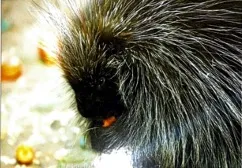
For 2022 and 2023, the Amerikazentrum took on an animal sponsorship for June, a female North American porcupine at Tierpark Hagenbeck.
June was born on 22 April 2019 and lives at Tierpark Hagenbeck, enclosure no. 59. A week after her third birthday, the Amerikazentrum visited her to meet her in person. We had hoped to see her in her preferred environment – in the trees – but unfortunately she “slept through” our visit and we only caught a fleeting glimpse of her in her dark den. We are not entirely sure whether we can really smell her well, as she gives off a rather pungent odour, but we do know that we have taken her to our hearts all the same.
Transatlantic friendship can take different forms and colours (and smells, too!), and this sponsorship is the best proof of it.
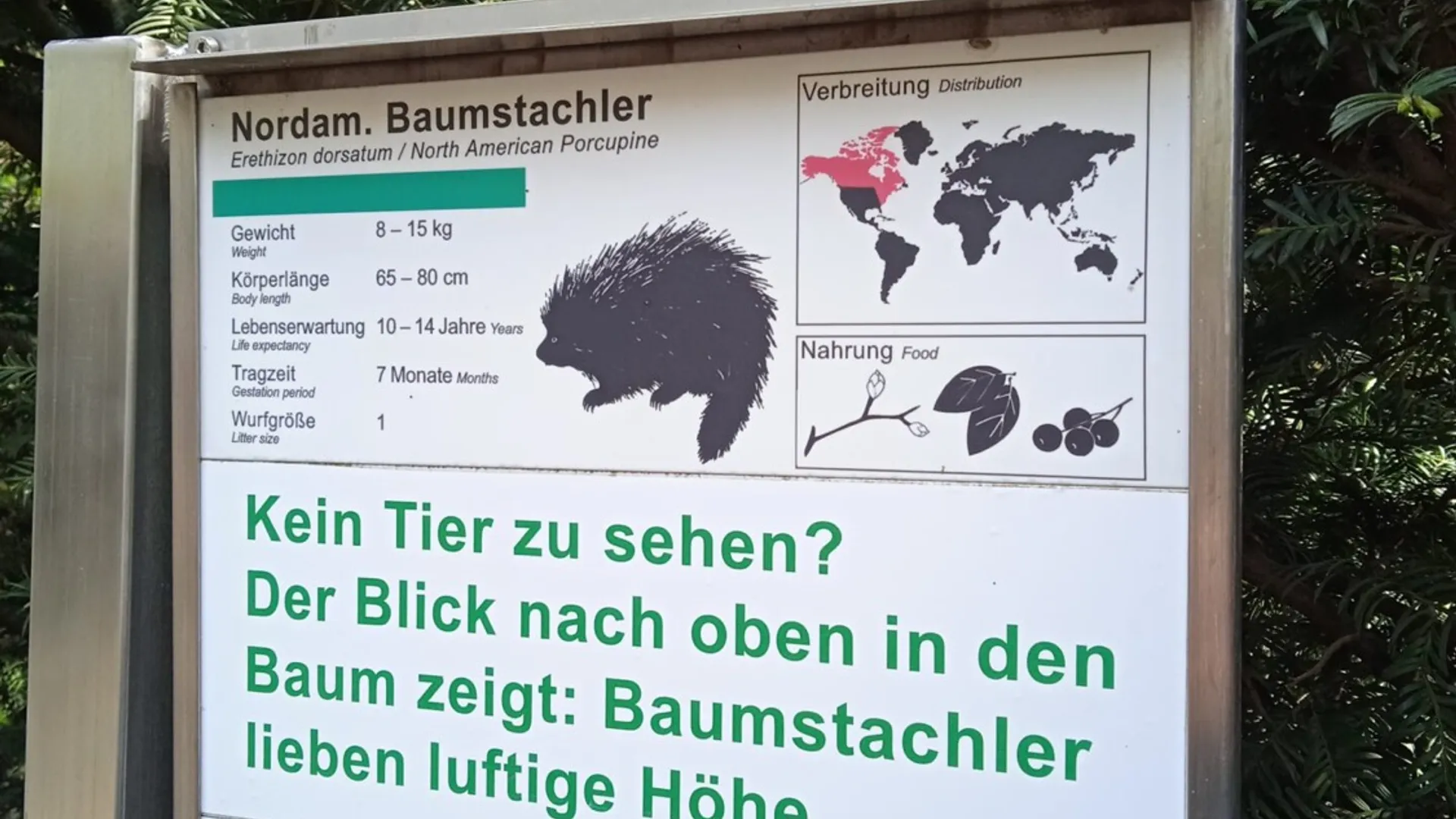
The North American Porcupine (Erethizon dorsatum)
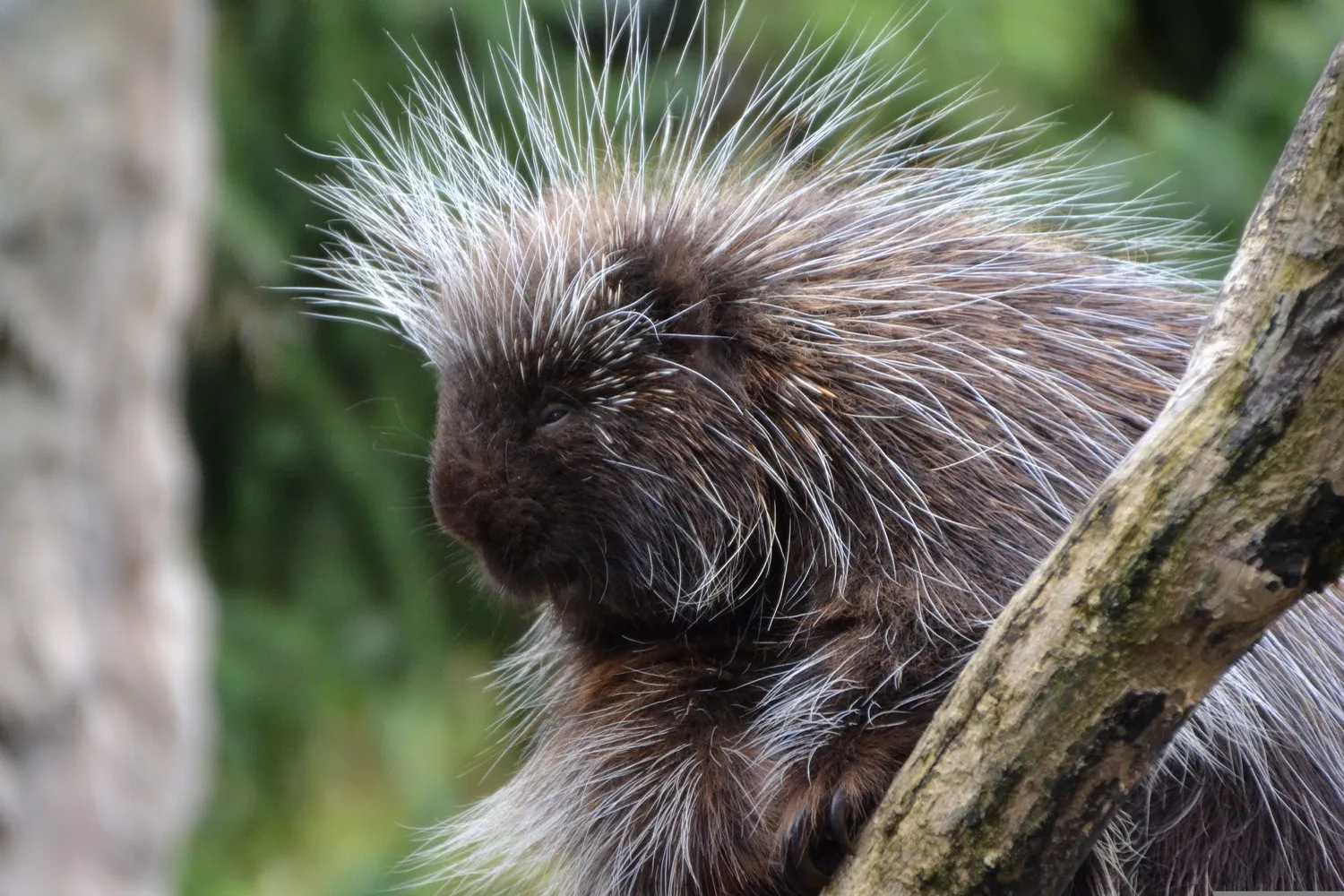
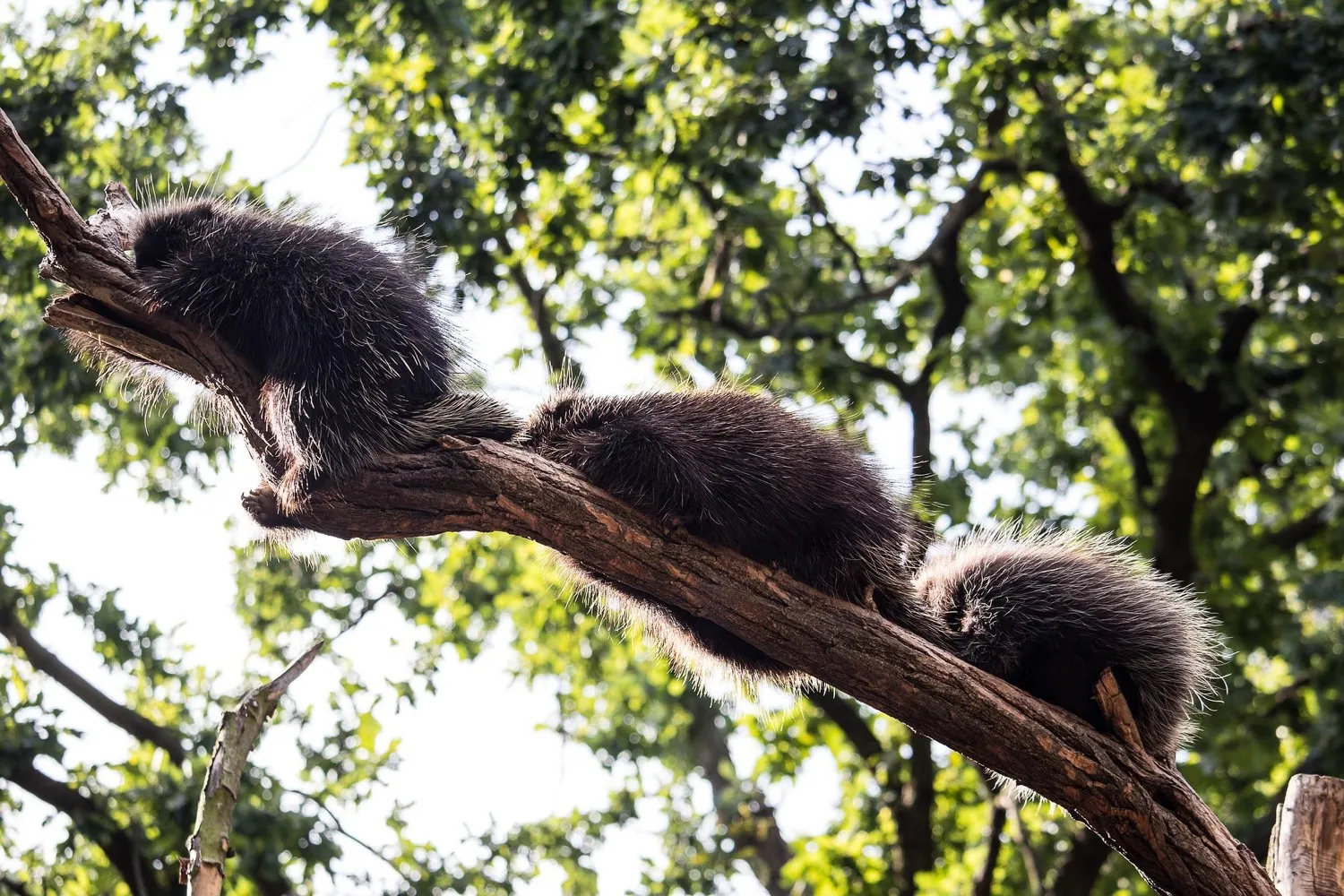
Porcupines, also known as New World porcupines, occur across the entire North American continent and resemble Old World porcupines in build. The North American porcupine is also known as the urson and is one of the best-known porcupine species. They are nocturnal and good climbers.
Size and build
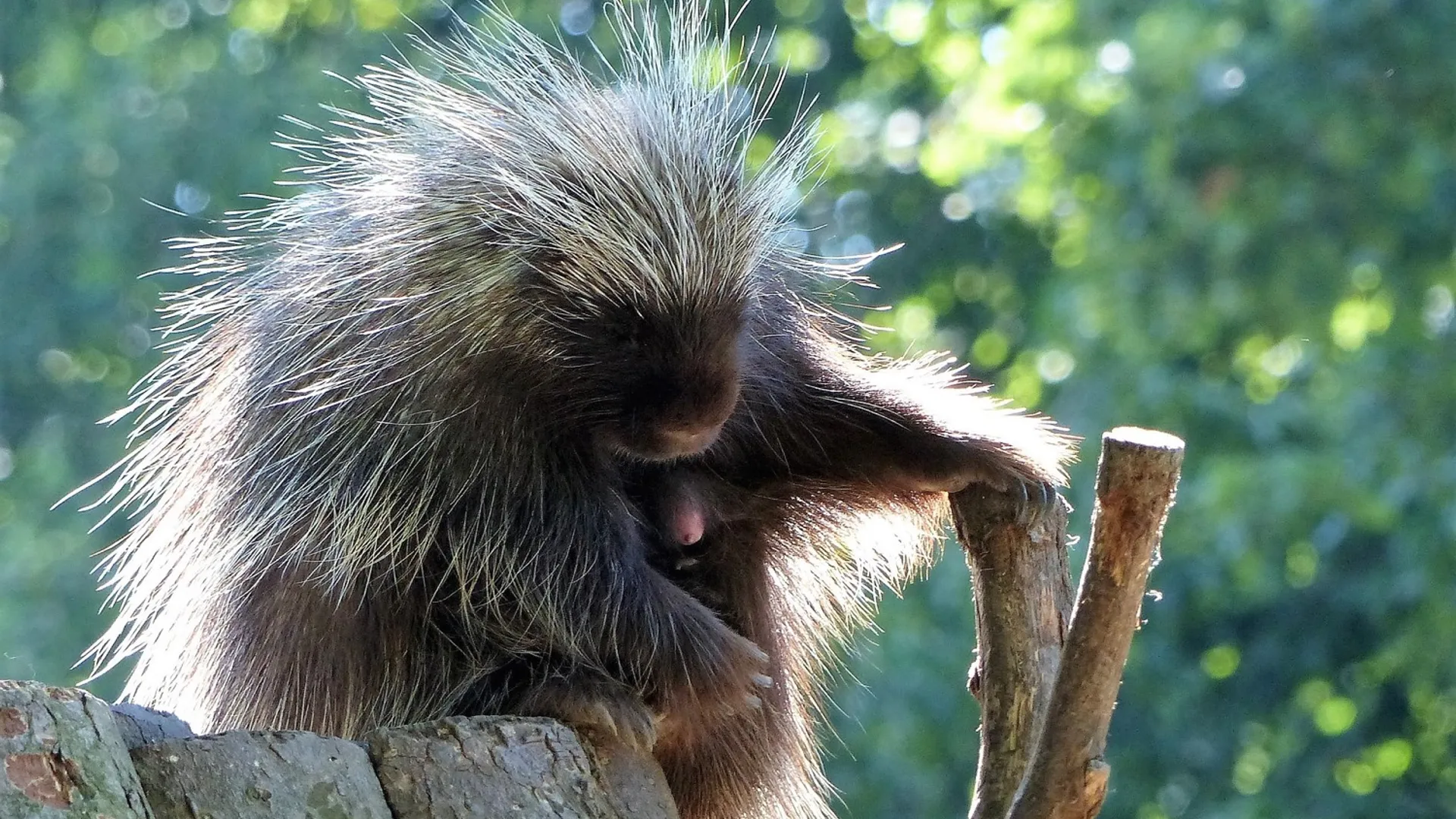
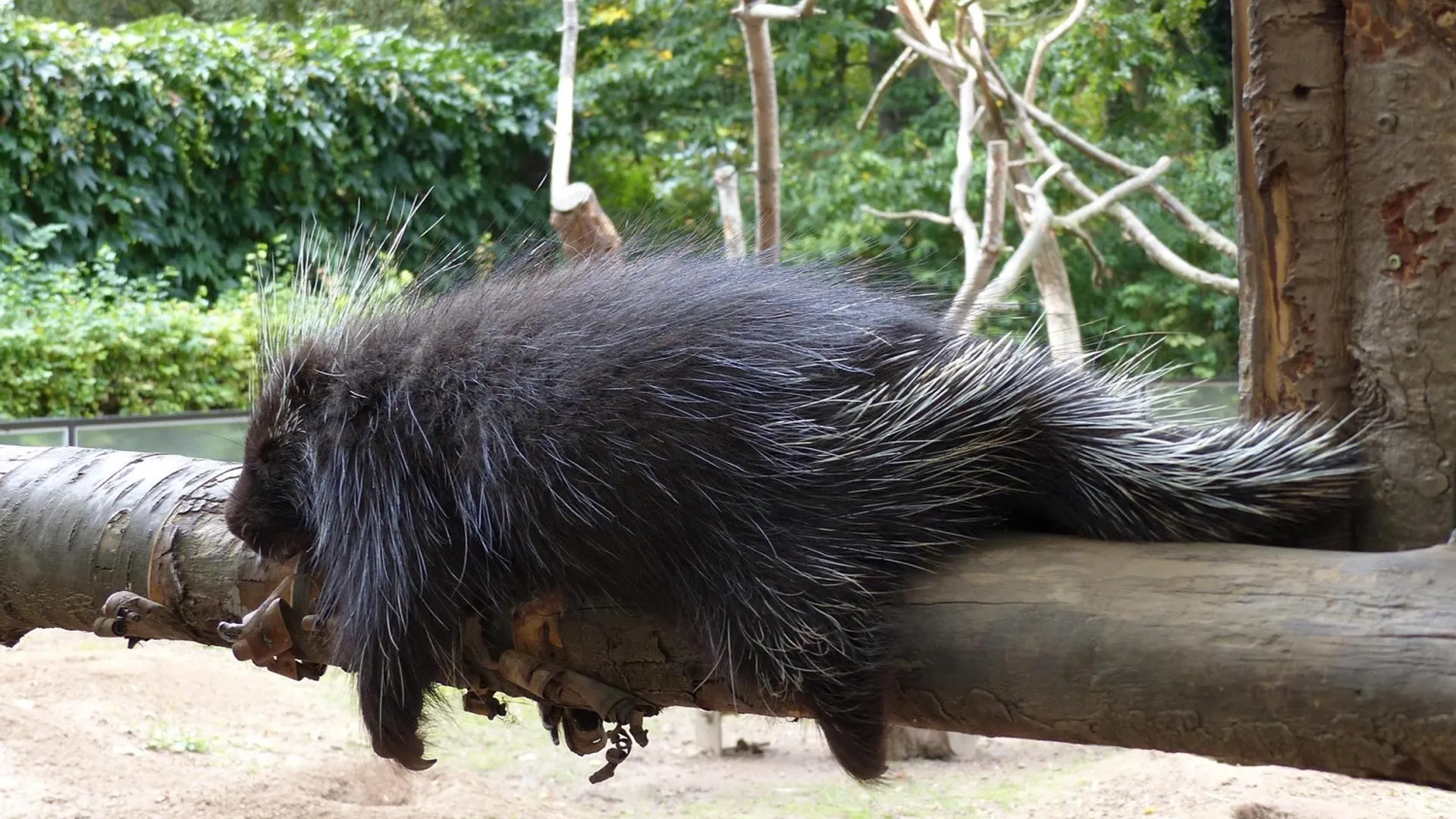
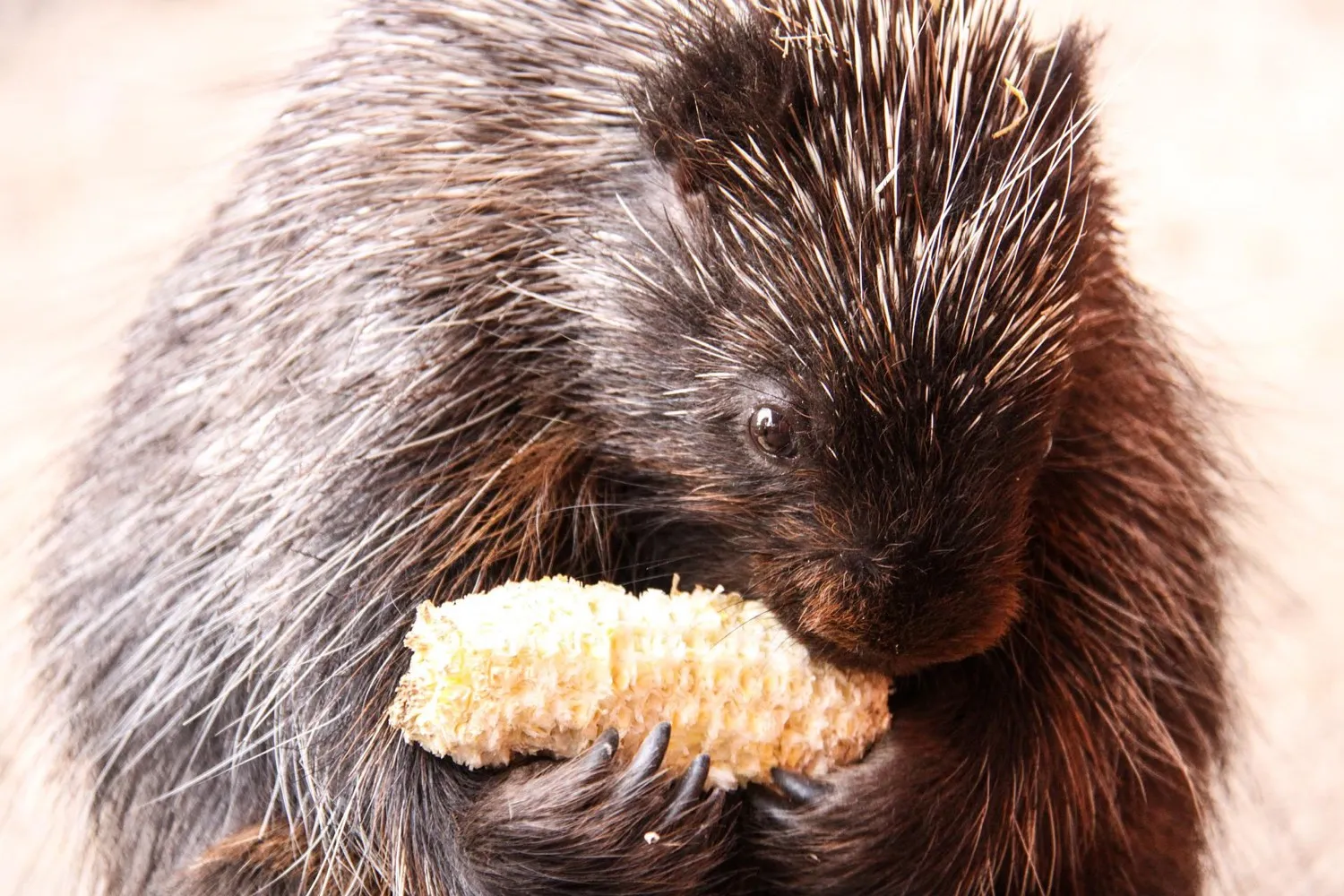
The porcupine’s body is stocky with a rather round head, a blunt snout and short limbs. The fur on the back and flanks is covered with long quills, which often have barbs and serve mainly for defence when flight – e.g. into trees – is not possible. Adult animals have about 30,000 quills up to eight centimetres long. After birth, the young still have a woolly coat and only develop their first small quills after a few hours.
They can reach up to one metre in length, of which the tail measures about 14–30 cm. On their feet they have long, curved claws that make climbing trees easier. Porcupines cannot see particularly well, but they can feel and smell all the better. In total they can reach a weight of around 18 kilograms and are, after the beaver, the second-largest rodent in North America.
Reproduction and age
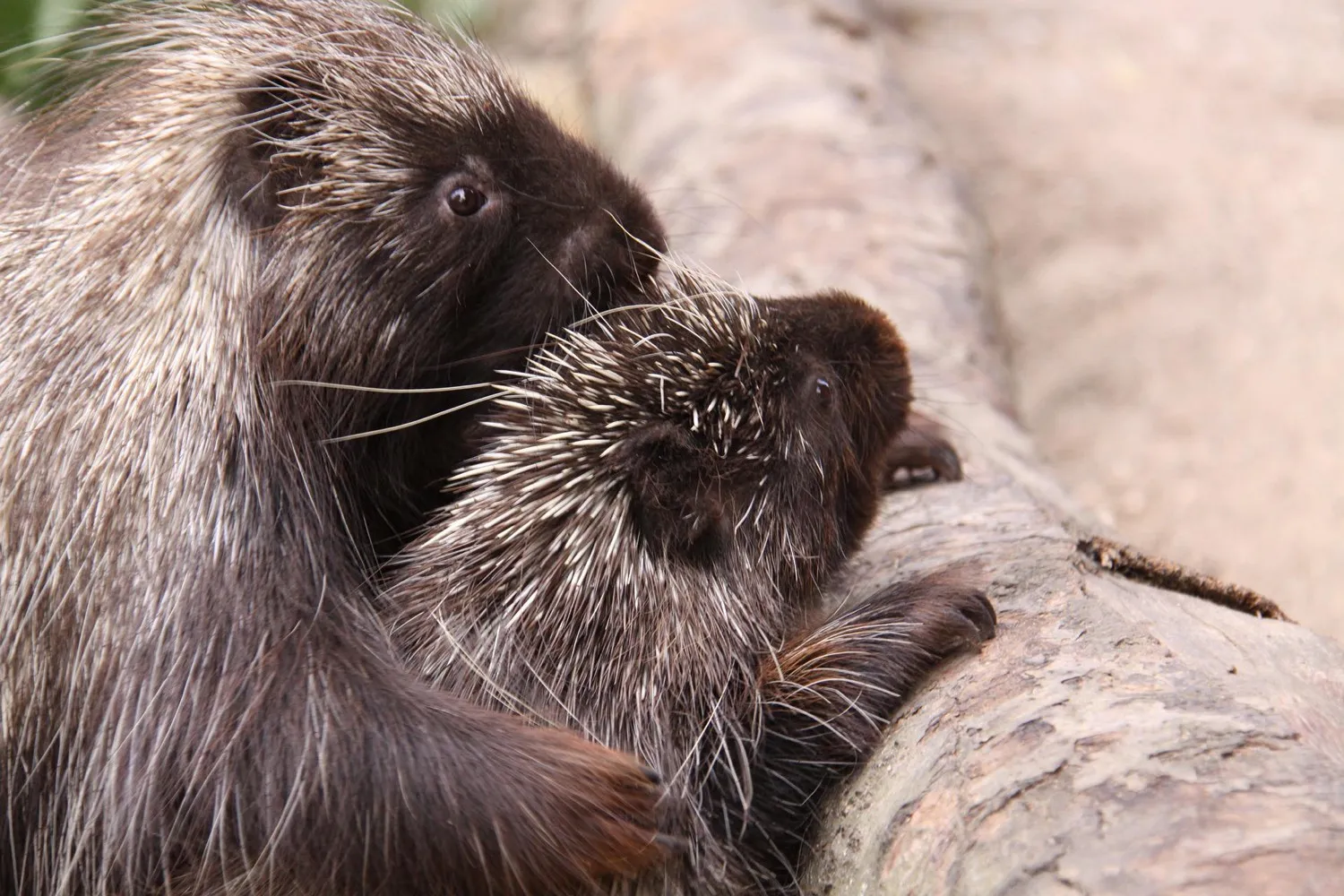
Porcupines live alone or in pairs. They reach sexual maturity at around 1.5 years. Their mating season is in autumn and early winter. Gestation usually lasts between 200 and 220 days, after which mostly only a single young is born. The young can climb after just a few days. The animals can live up to 14 years.
Habitat and food
The urson prefers forests but can also occur in grasslands or rocky terrain. As food, which they hold between their front paws, they especially like plant parts – tree bark, leaves, shoots, fruits and roots.
Predators and population
Their predators include martens, foxes, wolves, lynxes, coyotes, wolverines, minks, stoats, pumas, owls and bears. Their population is currently classified as of least concern on the IUCN Red List.
Impressionen

Read on
Reports from our work, news from the association and reviews of past events.